
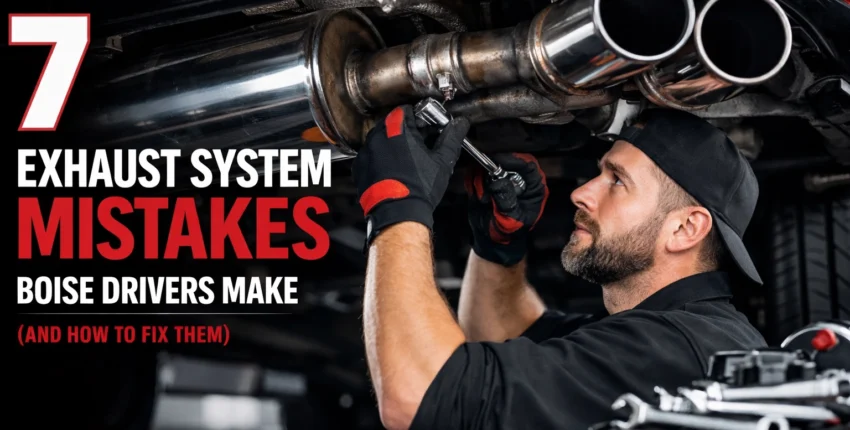
Have you ever pulled up to a stoplight on Eagle Road and felt like everyone was staring at your car? Maybe it wasn’t because of your new paint job, but rather that low, guttural growl or the embarrassing rhythmic “ticking” coming from underneath your vehicle. We’ve all been there: that sinking feeling in your stomach when you realize your car is making a noise it definitely shouldn’t be.
In the Treasure Valley, our vehicles go through a lot. From the sweltering summer heat to the salt and slush of a Boise winter, your exhaust system is constantly on the front lines. Here at Boise Muffler Auto Repair, we’ve been helping our neighbors since 1984, and we’ve seen it all. Your exhaust system is more than just a “muffler”; it’s a sophisticated network designed to keep your engine running efficiently, your cabin air safe, and the environment clean.
Unfortunately, many drivers inadvertently make mistakes that lead to expensive repairs. Let’s dive into the seven most common exhaust system mistakes Boise drivers make and, more importantly, how you can fix them before they turn into a major headache.
1. Ignoring the “Silent Killer”: Rust and Corrosion
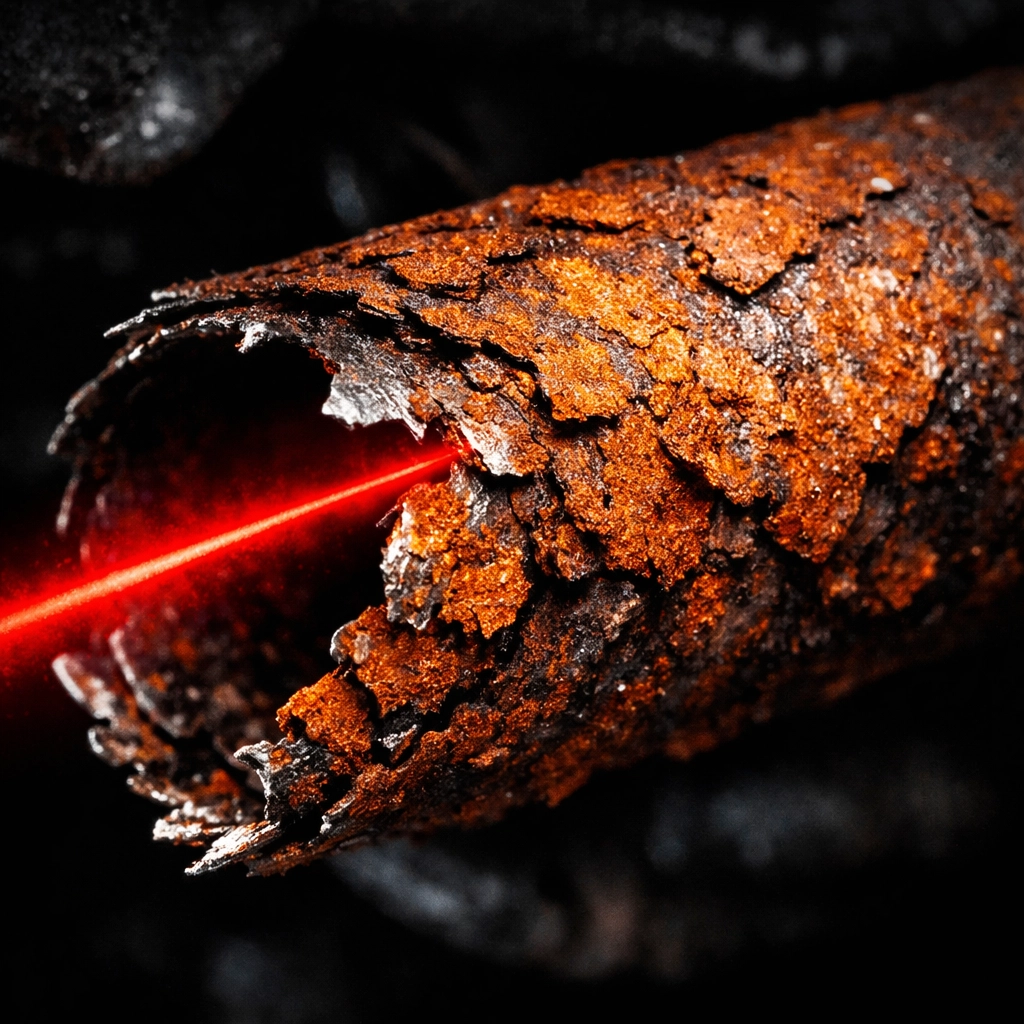
If you’ve lived in Idaho for a while, you know that our winter road crews do a great job keeping the streets clear. However, the salt and magnesium chloride used to melt ice are your exhaust system’s worst enemies.
The Problem: Rust is a chemical reaction that eats away at the metal components of your exhaust. Because your exhaust stays hot and is frequently splashed with cold, salty slush, it is the perfect breeding ground for corrosion. Many drivers ignore the orange-brown flakes on their pipes, thinking it’s just cosmetic.
The Consequence: Ignoring rust leads to holes in your muffler, resonator, and exhaust pipes. Once a hole forms, your car becomes loud, fuel efficiency drops, and dangerous gases can leak out. In extreme cases, a rusted-out hanger can cause your entire tailpipe to fall off while you’re driving down I-84.
The Solution: The best fix is prevention. During the winter, make it a habit to wash the undercarriage of your car regularly to remove salt. If you already see significant rust, come see us for a professional inspection. We can often patch small sections or replace specific pipes before the entire system fails, saving you a lot of money in the long run.
2. Overlooking that Subtle “Hiss” or “Rumble”
We tend to turn up the radio to drown out weird car noises, but when it comes to your exhaust, silence (or at least a quiet hum) is golden.
The Problem: You might notice a slight hissing sound when you accelerate or a deeper rumble than usual. These are classic signs of an exhaust leak. Leaks can happen at the manifold, the gaskets, or anywhere along the piping.
The Consequence: An exhaust leak is more than just a noise nuisance. It can cause your engine to work harder, leading to poor performance. More importantly, it’s a safety hazard. Exhaust contains carbon monoxide: an odorless, colorless, and deadly gas. If a leak occurs near the front of the car, those fumes can be sucked into your cabin through the ventilation system.
The Solution: If your car sounds “sportier” than it did last week, don’t wait. A professional technician can use specialized tools to pinpoint the leak. Often, it’s a simple matter of replacing a worn-out gasket or welding a small crack. It’s a small price to pay for your family’s safety and peace of mind.
3. Neglecting the Oxygen (O2) Sensor
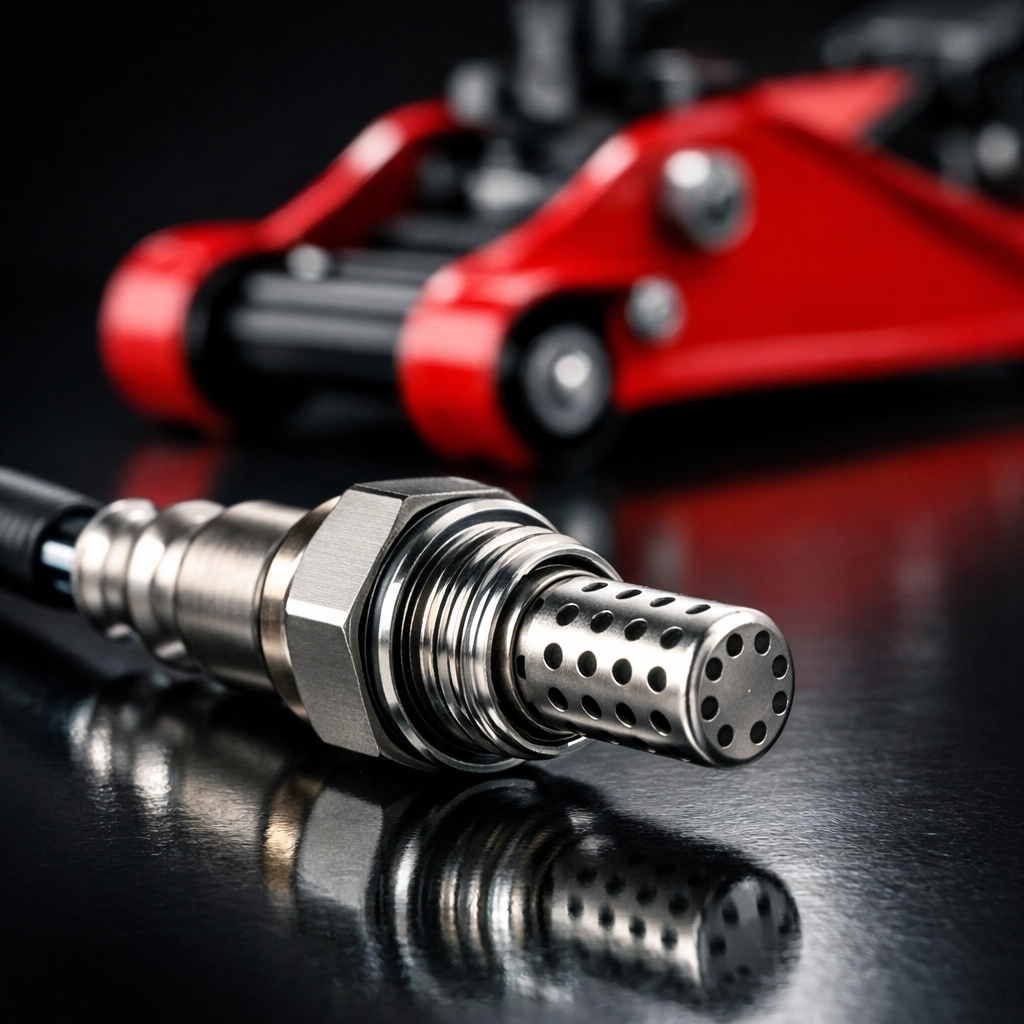
Most modern vehicles have at least two oxygen sensors. They act as the “eyes” for your engine’s computer, telling it exactly how much fuel to burn.
The Problem: Oxygen sensors live in a harsh environment and eventually wear out or become “lazy.” Many drivers see the check engine light pop up on their dashboard and ignore it because the car seems to be driving “just fine.”
The Consequence: A faulty O2 sensor will cause your engine to run “rich” (using too much gas). This destroys your fuel economy: which is the last thing you want with current gas prices. Furthermore, an unaddressed O2 sensor issue will eventually “cook” your catalytic converter, turning a $200 repair into a $2,000 one.
The Solution: When that light comes on, bring it in for a diagnostic. We use state-of-the-art equipment to verify if the sensor is truly the culprit. Replacing a sensor is a smart investment that pays for itself in gas savings almost immediately.
4. Delaying the Repair of a “Ticking” Exhaust Manifold
Does your car make a rhythmic “tick-tick-tick” sound, especially when you first start it up in the morning? That’s usually the sound of a leaking exhaust manifold or a broken manifold bolt.
The Problem: The exhaust manifold is the first point of contact for hot gases leaving the engine. Because it undergoes extreme temperature changes, the metal expands and contracts, which can eventually snap bolts or crack the manifold itself.
The Consequence: Beyond the annoying sound, a manifold leak can warp the valves in your engine due to the inconsistent backpressure. It also allows cold air to reach the O2 sensor, which tricks the computer and messes up your engine’s timing and fuel mixture.
The Solution: Fix it early. If it’s just a broken bolt or a failing gasket, it’s a relatively straightforward repair. If you wait until the manifold itself warps or cracks, the job becomes much more complex. We’ve been handling these types of delicate extractions and repairs at Boise Muffler for decades.
5. Ignoring the “Rotten Egg” Smell (Catalytic Converter Issues)
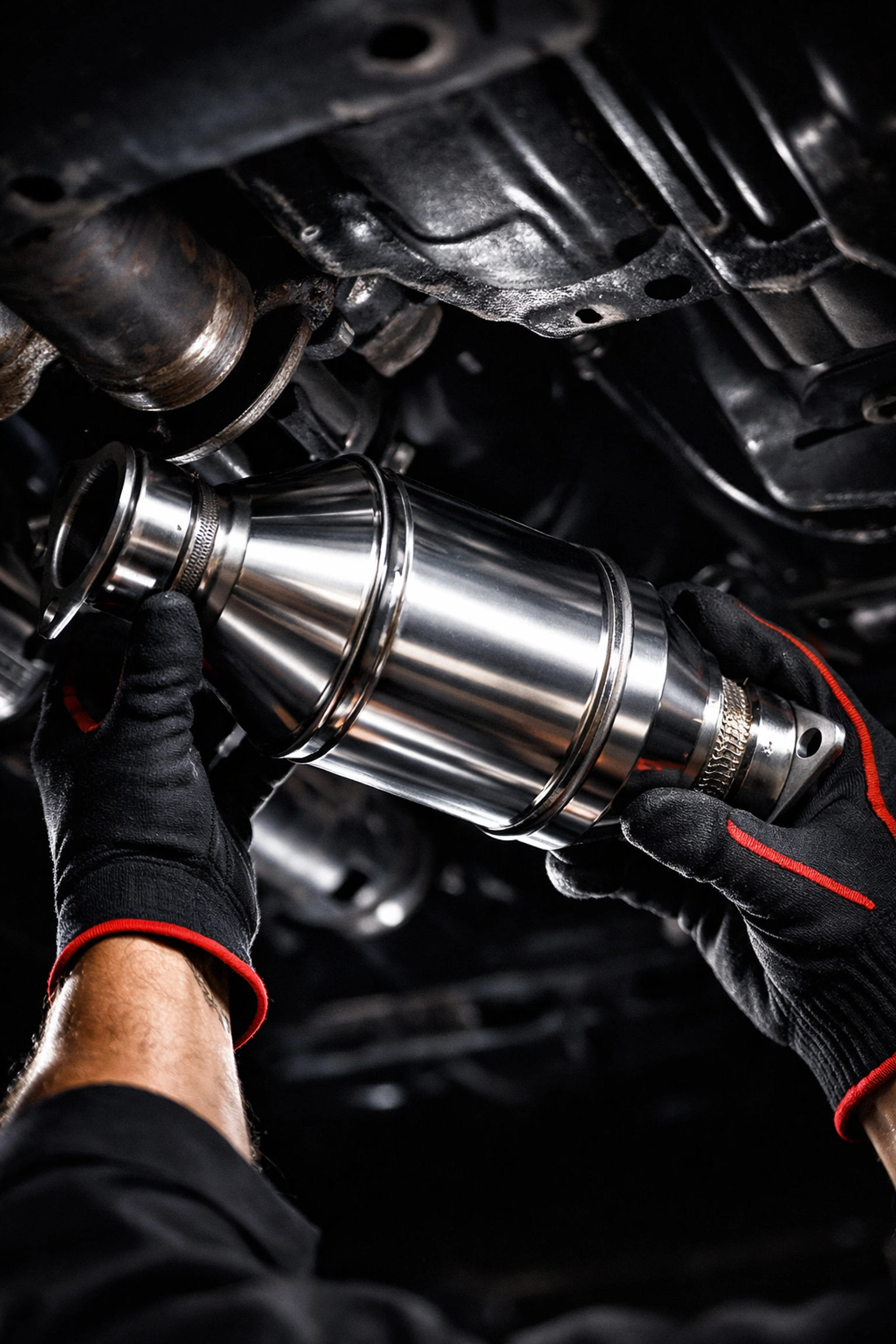
The catalytic converter is the most expensive part of your exhaust system. Its job is to turn harmful pollutants into harmless water vapor and nitrogen.
The Problem: If you smell sulfur or “rotten eggs” around your car, or if you notice a significant loss of power, your catalytic converter is likely failing. This usually happens because another issue (like a bad spark plug or O2 sensor) was ignored for too long.
The Consequence: A clogged catalytic converter acts like a plug in your exhaust. Your engine can’t “breathe,” which leads to overheating and potentially massive engine damage. Plus, you won’t pass an emissions test, and your vehicle’s performance will feel sluggish and unresponsive.
The Solution: Because this is a high-ticket item, you want a shop you can trust. We don’t just swap parts; we figure out why the converter failed in the first place so it doesn’t happen again. Check out our gallery to see some of the complex exhaust work we’ve handled for local Boise residents.
6. Allowing Pipes or Mufflers to Hang Loose
Boise has its fair share of potholes and rough backroads. Sometimes, a bumps or a heavy snowbank can knock an exhaust component out of its proper alignment.
The Problem: You might hear a “clunk” when you hit a bump or see your tailpipe sitting lower than usual. Many drivers think, “as long as it’s not dragging, it’s fine.”
The Consequence: Exhaust systems are designed to be suspended by specific rubber hangers that allow for vibration. If a hanger is missing or broken, the weight of the exhaust puts immense stress on the manifold and engine connections. This can lead to snapped bolts and expensive cracks. If the pipe is low enough, it can catch on a speed bump and rip the entire system out from under the car.
The Solution: This is often one of the quickest and cheapest fixes in the shop. We can replace a rubber hanger or weld a new bracket in minutes, providing you with safety and preventing a much larger bill down the road.
7. Missing the Signs of a Clogged System
Sometimes the problem isn’t a leak, but a blockage.
The Problem: Over time, internal components of a muffler can collapse, or a catalytic converter can melt internally. You might notice your car feels like it’s “struggling” or that you have to press the gas pedal much harder to get up to speed on the Connector.
The Consequence: A clogged exhaust causes extreme backpressure. This can lead to engine overheating, engine misfires, and eventually, total engine failure. It’s like trying to run a marathon while breathing through a straw.
The Solution: We can perform a backpressure test to see if your exhaust is restricted. If your car feels sluggish, don’t just assume it’s “getting old.” It might just need to breathe again!
Why Trust Boise Muffler Auto Repair?
Your car is one of your biggest investments, and we treat it that way. We aren’t just a “muffler shop”: we are a full-service automotive repair center that prides itself on honest answers and clear explanations. Whether you’re dealing with a squeak, a grind, or a roaring exhaust, our goal is to give you the peace of mind that comes with a safe, reliable vehicle.
If you’ve noticed any of the symptoms we talked about today, don’t let a small mistake turn into a huge repair bill. We’ve been serving the Boise community for over 40 years, and we’d love to help you keep your car on the road for many more.
Ready to get that noise checked out?
Contact us today or swing by the shop. Let’s get you back to enjoying those beautiful Idaho drives without the extra “soundtrack.”